
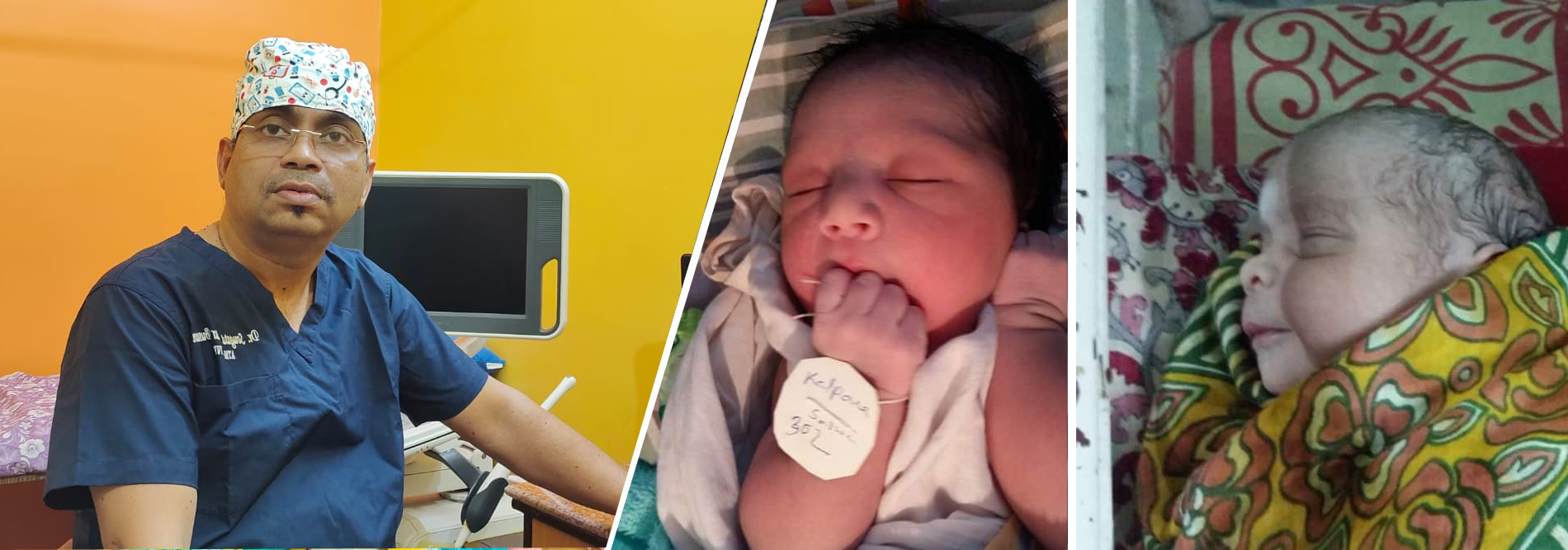
What is Infertility?
Infertility is defined as the inability of a married, sexually active couple to achieve pregnancy within one year of unprotected regular intercourse. Infertility may be diagnosed prior to one year if there are features or findings indicative of sub fertility.
These include:
- Oligo or amenorrhoea
- Inability to have intercourse
- Previous adjuvant therapy for cancer in either partner
- History indicating an increased risk of fallopian tube occlusion (that is, previous pelvic infection or previous pelvic surgery)
- Advanced women age (>35 years)
- Oligozoospermia or azospermia
Male Infertility Causes
These problems include:
Functional Defects: Erectile dysfunction, Premature Ejaculation, Retrograde Ejaculation.
Other Factors: Varicocele / Hydrocele, Undescended testis, Working trends & environment.
Low sperm count: This means there are too few or no spermatozoa in the semen.
Low sperm motility: This means that the sperm don't move as well as they should. Malformation of the sperm
Blocked sperm ducts: Spending a long time in a hot tub, wearing underwear that holds the testicles too close to the body can increase the testicular temperatures and impair sperm production and increased alcohol intake and smoking, can also have a negative effect on sperm count. Men who are 40 or older often have decreased fertility.
Female infertility causes
An ovulation: Lack of ovulation (release of eggs from the ovary). The major cause of an ovulation is a condition called polycystic ovary disease, or PCOS.
Endometriosis: Inability of the fallopian tubes to carry eggs from the ovary to the uterus. · Fibroid, tumors, cervical problems, or irregular uterine shape can keep the embryo from implanting in the uterus.
Age: Fertility declines with age, and even more so after the age of 35. Conception after age 45 is rare. Being overweight or underweight can also play a role in having trouble getting pregnant.
Assisted Reproductive Technology (ART):
Assisted Reproductive Technology (ART) refers to several variations in treatment tailored to patients' unique conditions. These procedures are usually paired with more conventional therapies, such as fertility drugs, to increase success rates. Almost one out of every three cycles of ART results in the birth of a baby.
The main ART techniques:
- Intrauterine Insemination (IUI) : This procedure is combined with hormone treatments to boost egg production can help couples with low sperm count, unexplained infertility, or cervical mucus problems. Semen is collected, and then delivered via a catheter inserted through the women's vagina and cervix to her uterus.
- In vitro fertilization(IVF) : This is one of the most commonly used procedures. Your eggs are combined with your partner's sperm in a dish in a laboratory. Once fertilization has occurred, the resulting embryos develop for 3 to 5 days before being placed in your uterus.
- Intracytoplasmic sperm injection (ICSI) : One of your partner's sperm is placed inside your egg with a microscopic needle, rather than many sperm positioned close to the outside of the egg, as in IVF, in a dish in a lab. Once fertilization occurs, the resulting embryo is placed in your uterus.
- Preimplantation genetic diagnosis (PGD) : This procedure enables physicians to identify genetic diseases in the embryo, prior to implantation, before the pregnancy is established. PGD was developed for patients who were at risk of having children with serious genetic disorders, such as hemophilia, which often discouraged them having their own biological children.
- Assisted Hatching: Before an embryo can attach to the wall of the womb, it has to break out or ‘hatch’ from its outer layer called the zona pellucida. It has been suggested that making a hole in or thinning this outer layer may help embryos to ‘hatch’, increasing the chances of the woman becoming pregnant in some cases.